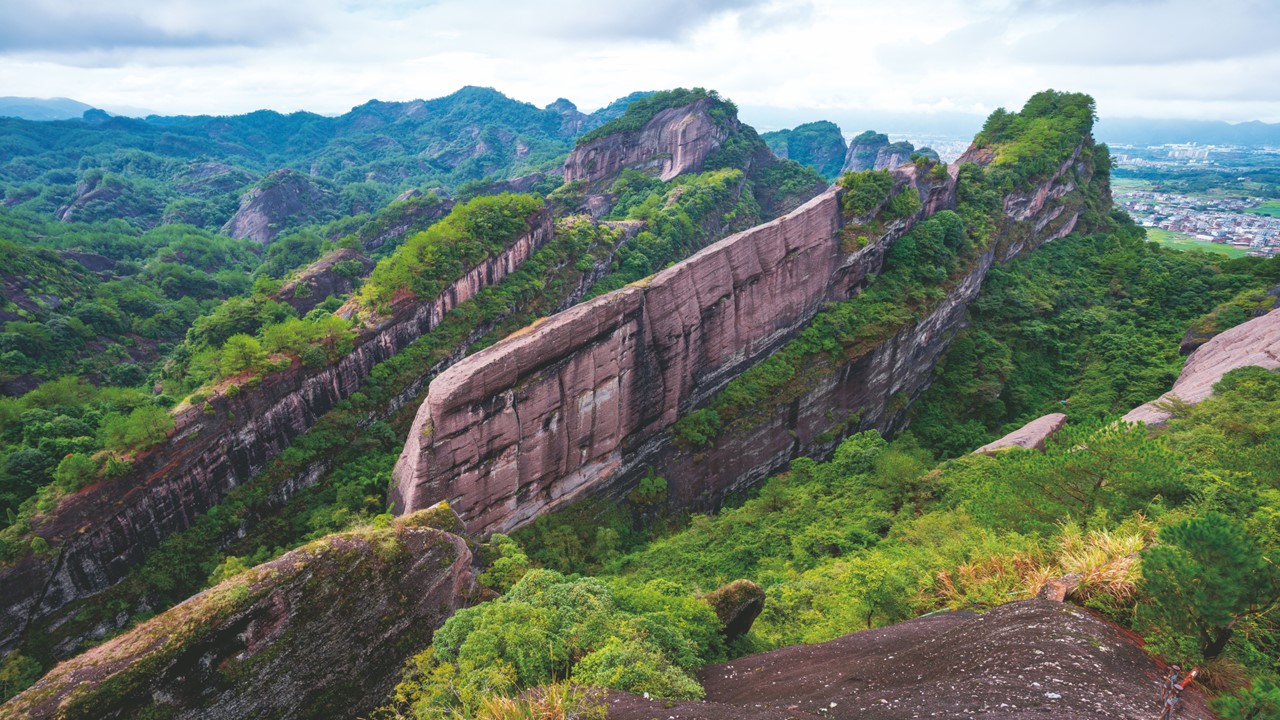
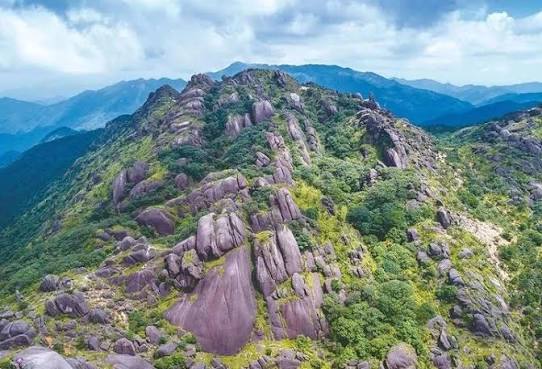
The Longyan UNESCO Global Geopark is located in the region where three rivers—the Minjiang, Jiulongjiang, and Tingjiang Rivers—originate, offering a geological record of tectonic evolution in southeast China covering a period of approximately 300 million years. The Longyan UNESCO Global Geopark’s abundant geological heritage includes the Meihuashan granitic complex, the Guanzhaishan red bed sedimentary rocks and the Zijinshan super-large porphyry-epithermal copper–gold deposit.
Home to the densest natural forests of West Fujian, the Longyan UNESCO Global Geopark displays rich biodiversity. The forest coverage of Meihuashan Mountain reaches 95.4%. It is described locally as the “Mother Mountain of the Fujian Province”. The Longyan UNESCO Global Geopark is home to endemic animal and plant species, including the Panthera tigris amoyensis (South China tiger) and the rare Taxus chinensis var. Mairei (Chinese Yew).
Longyan is the birthplace of the Hakka culture. Many unique traditions endure to the present day, including the “You Da Long”, where locals dance in a large dragon formation, the “Zou Gu Shi”, where locals wear traditional clothes and take part in a carnival, and the art of woodblock printing. The Peitian Landscape Roundhouses display the architectural style of the Hakka culture, arranged compactly along long cobbled streets.
Twinning
Longyan UNESCO Global Geopark and Lesvos Island UNESCO Global Geopark signed a twinning agreement on 12th October 2026, which contributes to closer cooperation and communication between the two regions with the aim of promoting, managing and developing geoconservation and enhancing the development of Geoparks.